“Kal thondri mann thondraa kaalaththae mun thondriya mooththa kudi”. Many Tamilians are conversant with this popular phrase from the Tamil work called ‘Purapporul Venbaamaalai.' This phrase encapsulates the pride of the Tamil clan, their civilization, and the Tamil language. Many Tamilians believe that Tamil is the classic mother language, the originator of all Dravidian languages. A section of scholars endorse this view. They argue that Tamil is the mother language of the entire Indian subcontinent and according to them various Dravidian languages emanated from one Old Dravidian language at different times. Although contrasting beliefs persist, some scholars assert that the ancient Dravidian language is Tamil and that all Dravidian languages branched off from it.
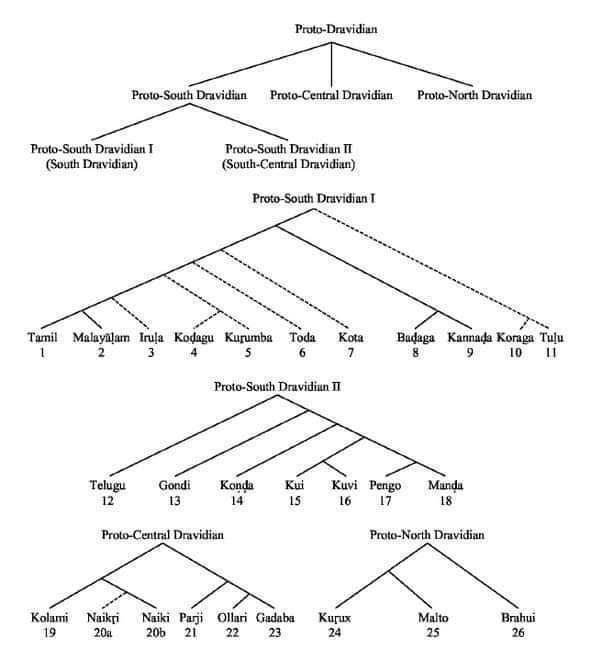
The Dravidian language family comprises approximately 80 language varieties predominantly in Southern and Central India and surrounding regions and their historical roots and exact dispersal remain perplexing. According to researchers, Tamil boasts the most extensive centuries-old literary tradition among the Dravidian language family’s four largest languages. A pertinent question emerges as to why these languages have not preserved the distinctive classical characteristics of Tamil if they have indeed originated from Tamil.
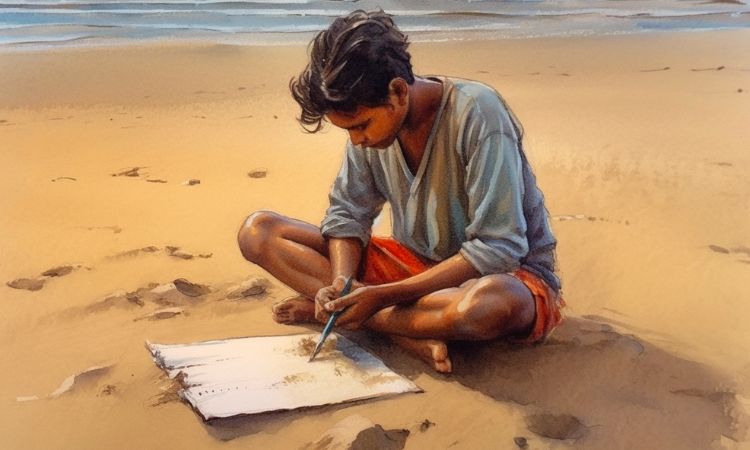
The widespread literacy of Tamilians in ancient Tamil Nadu is evident from the palm leaf manuscripts, stone and copper inscriptions written in Tamilbrahmi, cursive or vattezhuththu, Pallavar Tamil and Cholar Tamil. Prior to these, the scratched markings on pots found in the archaeological sites make it apparent of the literacy of the ancient Tamil people. Legitimate doubts about the direct lineage of other Dravidian languages to Tamil are raised since their scripts were dated to on or after the 5th century CE only while Tamil scripts are extensively predated.
The ancient Tamil grammar work Tolkappiyam said to be written 2500 years ago and the exemplified works of Sangam literature underscore the uniqueness of Tamil Nadu’s rich linguistic heritage. There are evidences that many such grammar and literary works prior to Tolkappiyam were lost due to the efflux of time. However such archaic grammars or literatures are not to be found in respect of other Dravidian languages. In such a situation it naturally leads to the logical conclusion that Tamil cannot be the sole progenitor of the other Dravidian languages.
Historical factors and external influences shaped the evolution of Dravidian languages. While Tamil flourished under the prosperous kings who were into trade connections with other nations, the other Dravidian languages struggled under foreign rule adopting Prakrit as their written form. This evidence suggests a complex linguistic history with diverse origins, challenging the idea that Tamil exclusively gave rise to all Dravidian languages.
Tamil proudly stands as a classical language with an extensive literary tradition. Continuous research by many scholars indicates that all Dravidian languages, including Tamil, share roots in a proto-Dravidian language. Instead of asserting exclusive parentage, let's celebrate Tamil for its classical features, its status as the oldest surviving language, and its unique characteristics. Embracing the rich linguistic diversity of the Dravidian family allows us to appreciate each language's distinct contributions without the need for hierarchical distinctions.
Note: The information presented in this blog post is sourced from the book "The Dravidian Languages" by Bhadriraju Krishnamurthy.